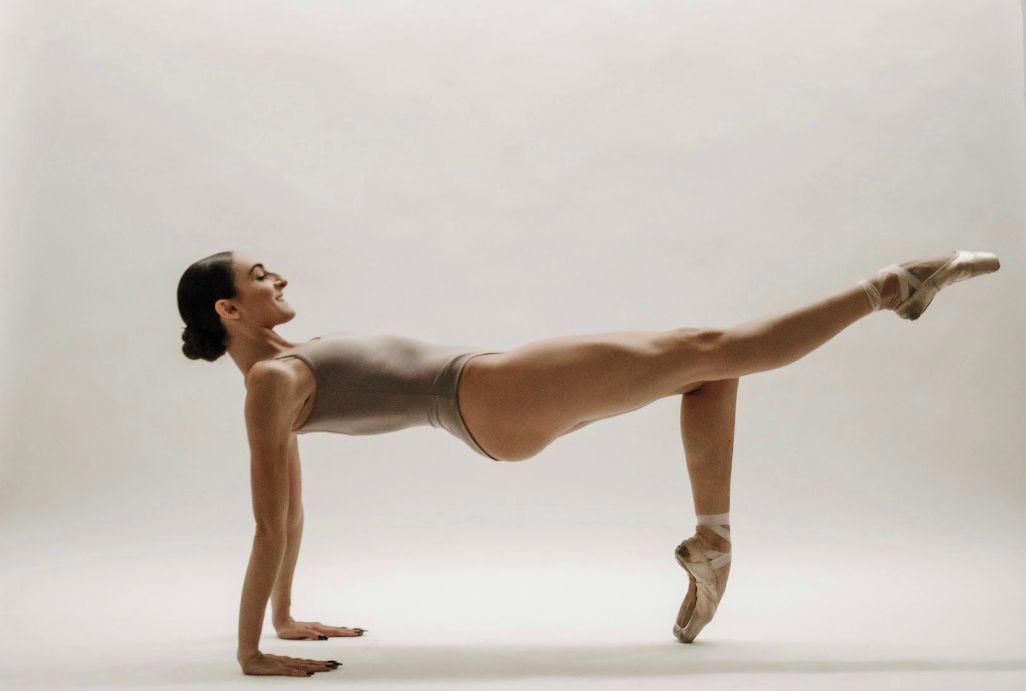
04.12.2020 – 19.45 – Today we want to tell you the love story between a girl and classical dance; we are talking about Sara Frazzetta, from Trieste, born in 1996. Grown up in the historic district of Borgo San Sergio, Sara began to take her first steps in the world of dance in 2004, among the ranks of the SocietàGinnastica Triestina.
She was struck by the elegance of the movements and technique of the dancers, her passion for dance grew exponentially year after year, thanks above all to the love for the discipline which her teacher, Alessandra Scaffei, passed on to her. A teacher who was destined over the years to become her mentor to the point that in 2015 she took part in an important audition in Florence, which gave her access to the ancient Dance Academy of the Bolshoi Theatre in Moscow.
Today, since 2016, she lives in the United States, more precisely in Sarasota, Florida, where she teaches dance to children and young people. In order to get to know this Julian talent more closely, we decided to get in touch with her via video call.
Sara, would you briefly tell us about the main stages of your career?
“With great pleasure. I started to become familiar with classical dance at the age of 8 and a half at the SocietàGinnastica Triestina. Teacher Alessandra Scaffei was my first teacher and my trainer and mentor for everything that happened afterwards. With her, I learned the so-called ‘Cecchetti Method’ (Italian method of ballet dance, Ed.). She has been an important key to my life. Without the support and advice of my teacher many things would never have happened. Thanks to my teacher Scaffei I was able to take part in competitions all over the boot, at regional and national level and even in an IDO World Cup”.
And then, the Bolshoi in Moscow?
“It is the most extraordinary thing I did under the wing of my teacher: the audition in Florence to enter the Bolshoi Academy in Moscow, one of the most prestigious and ancient ballet schools in the world. This, then, was the real springboard for my entire career. At the audition, in fact, I received a positive response, and I was called to take part in the Academy’s summer course, which students from all over the world attended. Later I also received an invitation to be a student at the Academy; my family decided to support me in this adventure”.
From Russia, Sara then moved to the United States.
“Yes. After completing the course, a friend of mine who I met in Russia and I chose to attend classes in an intensive course in Florida, at a school called ‘Sarasota Cuban Ballet School’ where I studied the Cuban ballet method. A very technical method. This school has been very important for my path and for my life, in fact, thanks to it, I was able to obtain two certifications in order to teach at the American Ballet Theater“. Having also taken this path in the world of dance, I joined a dance company in Miami, the “Arts Ballet Thather of Florida”. I stayed there for a season, after which, in that year, I injured both my knees; bad luck but in the end it turned out to be a real revelation as this unexpected event developed more interest in teaching in me. In those circumstances I also got to know the boy who has become my husband today. In any case, life went on and I also had the opportunity to work for five different dance studios and acquire a certification to become a fitness instructor at the bar, a discipline that after trying it out I considered very positive to be carried out even for a dancer, thanks to his preparation that trains long muscles, legs, abdomen and back perfectly. I still work with some of them today, teaching ballet”.
Did you also have other professional experience in the United States?
“For a while I also worked as a partner of Davis Robertson, artistic director of the New York Dance Project as well as former artistic director of the ‘Joffrey Ballet School’ and co-founder of ‘Russian Ballet International’, on a piece he choreographed at the Seaside Dance Festival in Florida. I also assisted and worked with teachers from the Accademia del Bolshoi during two summer internships organized in Italy in July and August 2017, between Florence and Urbino. Currently, I continue to be in contact with the Russian Ballet International to develop further projects on Italian soil, so that other students from the Bel Paese can have high-levelexperiences and study opportunities. I have recently opened an Instagram profile and a YouTube channel which I hope will grow over time, called “Fit on Pointe”, in which I treat all my passions in the same way. I believe that social media are a great way for boys and girls to contact me, to receive advice, to discover my future projects and to share my passion for dance”.
Speaking of passion. How did your passion for dance come about?
“As I mentioned earlier, my passion for dance was born slowly; it originated thanks to the love I have for the beautiful lines that dance creates, for the combination with music and all the opportunities for expression that it can give. The passion has grown in me over time, it was not love at first sight“.
Ginnastica Triestina was the Society where everything was born; has it remained in your heart?
“Absolutely yes, it couldn’t be otherwise. That is where I took my first steps and met my teacher. Those were unforgettable years”.
Earlier you mentioned the historic Bolshoi Theatre Academy; at what age can you enter it?
“Aspiring European dancers can enter at the age of 14, while those of Russian nationality can enter at the age of 7-8, who first undertake a preparatory course and then, at the age of 11, the actual course”.
How was the transition from Trieste to Moscow, then from Italy to Russia?
“The first few months I found it hard to believe it; I didn’t even know what was real anymore, starting from the day they gave me the invitation. In any case, it was a great honour for me to attend the Bolshoi Academy, it was an extraordinary experience”.
Did you notice any differences between the European and Russian teaching methods?
“Definitely. All methods have fascinating characteristics that distinguish them; I have had the opportunity to approach different methods from Italian to Russian to Cuban, also trying to find common elements and differences. The Russian method has proved to be my favourite because, as I said before, I love the beauty and delicacy of the movements but also the strength and meticulous study of the lines, characteristics on which the Russians work maniacally. This method is also the one that has fed my passion for dance the most”.
From an athletic point of view or the movements to be performed?
“Either way, studying a certain method goes beyond the study of movements; it is really a singular question of approach to the study of exercises”.
Do you know other Italians who have had the opportunity to use the teachings of the Bolshoi Accadaemia as a springboard?
“Yes, some are also my friends. A couple of them work at Mariinsky in St. Petersburg, others around the world and all at a high level”.
Did you have to make sacrifices to get to the top? If so, which ones were the biggest?
“Certainly, both physical and mental. The first one was having to leave my family and go and live in a faraway country. Then certainly the hard physical work. There were good days and bad days. Dance is a discipline in which you receive a lot of criticism and you have to be open and strong to bear it all. Unfortunately, all this often leads some dancers to ponder extreme gestures because not everyone is able to withstand the pressure both physically and emotionally. Fortunately, this was not my case”.
Do you mean post-performance criticism or criticism from the instructors?
“Particularly from the instructors; criticism due to the outcome of an audition where you are in competition both with others and with yourself”.
What qualities must a dancer have nowadays in order to stand out from others?
“In addition to the technical and expressive aspect, the dancer must be both artist and actor at the same time, know how to play the role entrusted to him or her, find his or her own way of expressing himself or herself and be able to reach the heart of the audience or the examination boards. He must develop a personal style. Moreover, in the world of dance, physical performance is fundamental, then it depends on the companies; not all of them hire dancers according to the same criteria, it also depends a lot on the country in which you are located”.
Is there more satisfaction in interpreting or teaching?
“Both! I think they go hand in hand. When I teach, I think about the result I can achieve by bringing certain artistic solutions on stage; already visualising the final result in my mind, imagining the reactions of the audience and identifying with the emotions felt by the students while they dance, all this gives great satisfaction”.
How much preparation is there behind the staging of a performance or show?
“Months of continuous preparation and training. At the beginning you learn the steps, then you proceed to the “cleaning” of the movements, until you get to the coordination between movements and choreography. In a dance school usually everyone is given the opportunity to be part of the final performance, then sometimes meritocracy prevails and the more experienced or “older” dancers are favoured, andwill receive the main roles”.
Can dancers and dancers of different ages and generations coexist in the cast of a performance or is there a limit?
“There are ballets, the so-called royals, such as “The Nutcracker”, where dancers of different ages and generations dance simultaneously. The age limit depends on the talent and luck of the individual, the older ones, except for accidents along the way, can be as much as 40 years old”.
How old are the children you are currently teaching?
“I teach children from the age of 3 and a half up to primary school, through middle and high school children to adults. Then the students can decide whether to quit or make dance a real profession“.
What advice would you give to a child who would like to undertake the discipline of ballet?
“The main advice I would give is to appreciate the discipline itself, to find pleasure in the beauty of being able to move in harmony, not to be afraid of the difficulties they will encounter along the way, because if they are tenacious, they will succeed in obtaining many satisfactions”.
“Unfortunately, today we live in a society of “everything and now” and very often children do not have patience, they do not want to make too many sacrifices to achieve something. I would like to remind the children that no discipline can give you everything and immediately; especially if you want to aim to reach great levels”.
Are Covid-19 and its pandemic affecting the world of dance?
“The virus has brought many problems to our world but in other respects it has been fundamental to open it up to the modern era by showing the real possibility of being able to carry out all training electronically. Never before, in fact, had it been thought of receiving lessons from “Master Teachers” directly from home. Covid-19 and social media have connected many teachers by opening the world of dance to private lessons and online preparation sessions. Here in Florida, where I live, many people emigrate to less humid states in the summer and as a result cannot attend the whole summer dance lessons package. With the advent of online classes, however, this deficit has disappeared. I currently teach people who live several miles away from me”.
As a performer, have you had to revise your programmes and postpone performances?
“Unfortunately, yes. As a performer, we have had to give up performing several shows; others have instead been repeated several times, thus allowing all the payers to attend the event in a staggered manner, therefore, in small groups”.
[Gabriele Turco]
[m.g]