by Zeno Saracino
22.01.2024 – 10.20 – A new algorithm for the diagnosis of blood cancers was developed by a joint effort of researchers of Genomics England, of the University of Trieste (UniTS) and of the Great Ormond Street Hospital for Children of the NHS Foundation Trust. There is therefore also some Trieste in the British health, whereas the algorithm has already been adopted by the United Kingdom National Health Service.
Called TINC (Tumour In Normal Contamination assessment) the new algorithm permit to estimate the level of cancer contamination in the affected person’s ‘healthy’ blood samples. The cancer patients may in fact benefit from complete genome sequencing, useful to identify any mutations that affect the development of the tumour and therefore its prognosis and treatment. The operation required a confront between DNA and the ‘diseased’ and ‘healthy’ cells. It is often difficult to distinguish, in blood sampling, which are those healthy and which those diseased. The problem arises in particular with blood cancers, considering how cancer and healthy cells both are present in the bloodstream. TINC allows to estimate the level of contamination in the cell under investigation, ensuring that the genome can be sequenced more safely. Not a cure, but a solution to find better diagnosis of treatment.
The new algorithm immediately became part of the working tool with which Genomics England, British society owned by the UK Ministry of Health and Social Welfare, daily provides the analyses of Whole Genome Sequencing to hospitals and to clinical centres of the UK National Health Service.
How was the algorithm developed? Researchers tested TINC using the sequencing data collected under the large-scale project ‘100.000 genomes’ that in 2013 led to the foundation of Genomics England. They then compared the data processed by the algorithm with those obtained through standard technologies used for the residual disease test in the tumor of the blood. It is about tests in which it occurs the number of cancer cells remained in the blood of a patient after treatment.
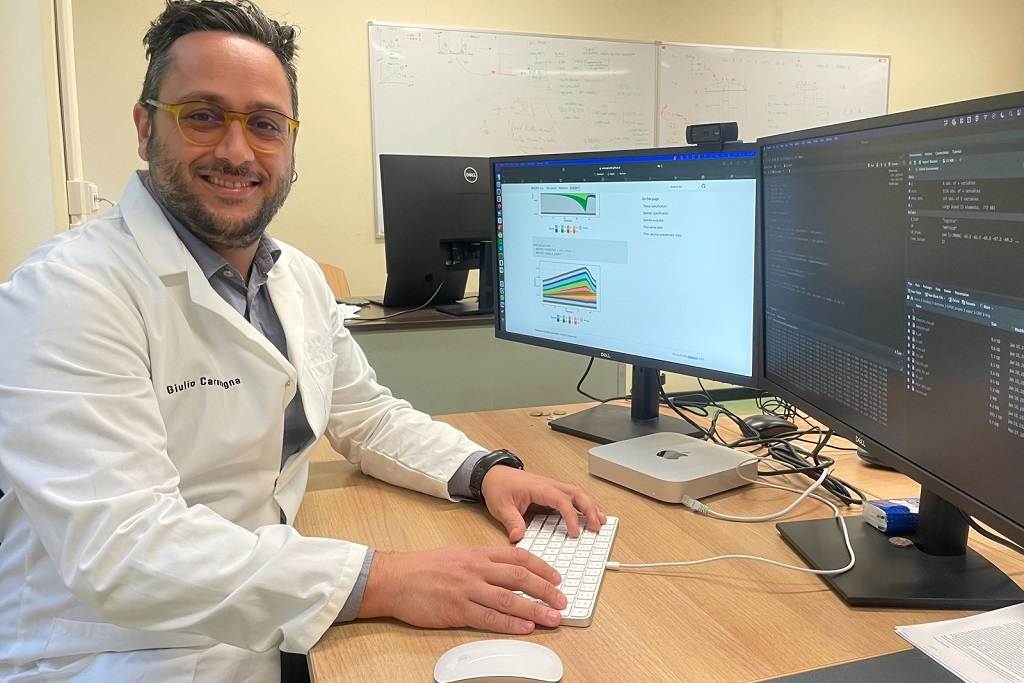
“Projects that on a large scale use sequencing technologies to study oncological diseases have revolutionary potential”, says Giulio Caravagna, professor of computer science at the University of Trieste and responsible for the Cancer Data Science Laboratory, supported by the Foundation AIRC for cancer research.
“However – continue Caravagna – the use of innovative technologies as Whole Genome Sequencing requires equally innovative analysis tools. Our laboratory is strongly specialised in the constructions of such tools. The development of TINC was born within a prestigious international collaboration between the University of Trieste and Genomics England and its implementation in a clinical context through the English territory represents an exceptional achievement that confirms the value of research in data science of our university”.
“The implementation of the algorithm TINC in the pipeline of Genomics England – explains Alona Sosinsky, Scientific Director of Oncology at UK Public Enterprise – has allowed us to improve the accuracy of genomic tests for patients with cancers of the blood. This project is a successful example in which data generated by a large scale sequencing project are interpreted using advanced analyses techniques, in order to obtain more precise tools from which make clinical decisions for patient care”.
“Thanks to the Service of Genomic Medicine, we now use the sequencing of the entire genome routine for diagnostics in clinical settings – says Jack Bartram, specialist in pediatric haematology at Great Ormond Street Hospital for Children, structure managed by NHS Foundation Trust – The implementation of the TINC algorithm allows us, as clinical, a greater confidence in genomic data analysis, that are ultimately used every day to improve the therapies aimed to our patients”.
[k.d]